SIOP Comprehensible Input
Learn what comprehensible input is and how SIOP Component 3 helps teachers make academic content understandable for English Learners. Discover practical techniques including visuals, modeling, adapted...

SIOP stands for Sheltered Instruction Observation Protocol. It is a research-based instructional framework designed to make academic content accessible for English Learners while simultaneously developing their English language proficiency. Originally developed in the 1990s and refined through more than two decades of classroom research, SIOP has become the most widely used and rigorously validated model for sheltered instruction in the United States and internationally.
At its core, SIOP is a lesson planning and delivery system built around 8 components and 30 specific features that describe what effective instruction looks like in classrooms with English Learners. It is not a curriculum — it does not prescribe what to teach. Instead, it provides a comprehensive framework for how to teach, ensuring that every lesson is designed so that English Learners can access content, develop academic language, and demonstrate what they know.


The term "sheltered" in SIOP does not mean simplified or watered down. It means protected — instruction that is deliberately designed to protect English Learners from being left behind by the linguistic demands of academic content. In a sheltered instruction classroom, grade-level content is taught using strategies that make it comprehensible to students who are still developing English, without reducing the rigor or depth of the curriculum.
Think of sheltered instruction as building a bridge between what students already know and what they are expected to learn. That bridge is made of carefully chosen vocabulary, visual supports, explicit connections to prior knowledge, meaningful interaction, and consistent scaffolding — all hallmarks of the SIOP model.
The SIOP model was developed by Dr. Jana Echevarría, Dr. MaryEllen Vogt, and Dr. Deborah J. Short through a research study funded by the National Center for Research on Education, Diversity, and Excellence (CREDE). Their work began in the early 1990s and culminated in the publication of the first edition of Making Content Comprehensible for English Learners: The SIOP Model in 1999.
What made SIOP different from other frameworks was its empirical foundation. Echevarría, Vogt, and Short developed the SIOP observation protocol as a tool for measuring the quality of sheltered instruction — and then used that protocol to study what actually worked for English Learners across hundreds of classrooms. The result was a framework grounded in classroom reality, not just educational theory.
Since its original publication, SIOP has been adopted by school districts across the United States and in more than 30 countries worldwide. It is endorsed by major educational organizations and has become the standard for teacher preparation programs focused on English Learner instruction.

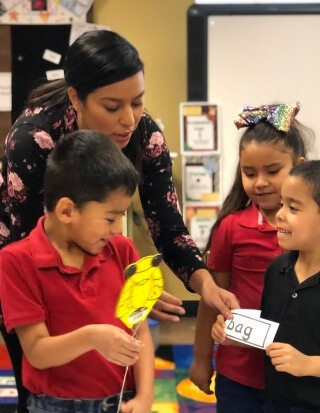
SIOP was designed primarily to support English Learners — students who are developing proficiency in English while simultaneously learning academic content in English-medium classrooms. This includes students who have recently arrived in the United States as immigrants or refugees, long-term English Learners who have been in American schools for several years but have not yet reached full academic proficiency, and students classified as English Learners under federal and state definitions.
However, research consistently shows that SIOP benefits all students. The emphasis on clear learning objectives, explicit vocabulary instruction, meaningful interaction, and high-order thinking produces better outcomes across the full range of learners in a classroom. Schools that implement SIOP school-wide — not just in designated ESL classrooms — often report improvement in achievement for all student populations.
The SIOP framework is organized into 8 components, each addressing a distinct dimension of effective instruction for English Learners. Every SIOP lesson is designed with all 8 components in mind.

Many instructional frameworks address one or two dimensions of teaching — differentiation, cooperative learning, or assessment, for example. SIOP is distinctive because it integrates all of these dimensions into a single, coherent framework specifically designed for the unique challenge of teaching content to students who are learning the language of instruction at the same time.
SIOP is also unusual in being an observation protocol as well as an instructional model. The same framework used to plan instruction can be used to observe and evaluate it. This means teachers can self-assess their lessons against the SIOP features, and instructional coaches can use the protocol to provide structured, objective feedback. This dual function — planning tool and observation tool — makes SIOP exceptionally well-suited for professional development and teacher growth.
No — and this is one of the most important things to understand about SIOP. While it was developed to support English Learners, the SIOP model is designed for use in any classroom where English Learners are present. In most American schools, this means SIOP is relevant for science teachers, math teachers, social studies teachers, and English language arts teachers — not just designated ESL specialists.Lorem ipsum dolor sit amet, dolores maiestatis sed te, sint similique te vim. Dicam luptatum sapientem qui cu, ei prompta utroque efficiendi eam. Cu mei omnis oporteat pertinax, ei duis veniam propriae mea. Et alia recteque efficiendi mea. Pri at velit falli intellegebat, ut vix munere electram.
In fact, SIOP is most powerful when it is implemented school-wide, with every teacher in a building using the same framework and the same language about instruction. When a student encounters consistent vocabulary instruction, explicit objectives, and structured interaction across all of their classes, the cumulative effect on language and content learning is far greater than what any single teacher could achieve alone.

Learning the SIOP model well requires more than reading the research. It requires experiencing SIOP instruction firsthand — seeing the strategies modeled, practicing them in a supported environment, and receiving feedback on implementation. That is why the English Learner Institute exists.Lorem ipsum dolor sit amet, dolores maiestatis sed te, sint similique te vim. Dicam luptatum sapientem qui cu, ei prompta utroque efficiendi eam. Cu mei omnis oporteat pertinax, ei duis veniam propriae mea. Et alia recteque efficiendi mea. Pri at velit falli intellegebat, ut vix munere electram.
The ELI is a 4-day live virtual professional development experience built on the SIOP model, led by Master Trainer Dr. John Kongsvik. Teachers don't just learn about SIOP — they experience it, because Dr. Kongsvik teaches every strategy the way he wants teachers to teach it, modeling SIOP techniques in real time throughout the training.
Join the English Learner Institute — a 4-day LIVE virtual professional development experience built on the SIOP model. Led by Master Trainer Dr. John Kongsvik.
Q: What does SIOP stand for?
A: SIOP stands for Sheltered Instruction Observation Protocol. It is both an instructional model for teaching English Learners and an observation tool for evaluating the quality of sheltered instruction.
Q: Who created SIOP?
A: SIOP was developed by Dr. Jana Echevarría, Dr. MaryEllen Vogt, and Dr. Deborah J. Short through research funded by the National Center for Research on Education, Diversity, and Excellence. Their foundational text, Making Content Comprehensible for English Learners: The SIOP Model, was first published in 1999.
Q: Is SIOP only for English Learners?
A: SIOP was designed with English Learners in mind, but research shows it benefits all students. Schools that implement SIOP school-wide typically see improved outcomes across all learner populations, not just English Learners.
Q: How is SIOP different from other instructional models?
A: SIOP is unique in that it addresses all dimensions of effective instruction — preparation, background knowledge, comprehensible input, strategies, interaction, practice, delivery, and assessment — in a single integrated framework designed specifically for teaching content to students who are simultaneously learning English.
Q: How many components does SIOP have?
A: SIOP has 8 components and 30 features. The 8 components are: Lesson Preparation, Building Background, Comprehensible Input, Strategies, Interaction, Practice and Application, Lesson Delivery, and Review and Assessment.
info@tesoltrainers.com | (505) 204-4361
Copyright © 2026 TESOL Trainers. All rights reserved.