
Lesson Preparation is the first of the eight SIOP components, and it sets the tone for everything that follows. Before a teacher says a single word to students, the decisions made during lesson preparation determine whether content will be accessible, language will be developed, and students will be engaged. In the SIOP framework, lesson preparation is not just about choosing activities or organizing materials. It is about intentionally designing instruction so that every student—especially English Learners—has the support they need to succeed.
What makes SIOP Lesson Preparation different from traditional lesson planning is its explicit attention to language. Most planning frameworks ask teachers to think about content: what will students learn? SIOP adds a parallel question that changes everything: what language will students need to access, process, and demonstrate that learning? This dual focus on content and language is what makes the SIOP model so powerful for diverse classrooms.

SIOP Lesson Preparation refers to the deliberate planning decisions teachers make before instruction begins. It encompasses six features—more than any other SIOP component—which signals just how critical this stage is. These features guide teachers through defining clear objectives, selecting appropriate materials, adapting content to students’ proficiency levels, and designing activities that integrate content learning with language practice.
The six features of SIOP Lesson Preparation are: writing clear content objectives for students (Feature 1), writing clear language objectives for students (Feature 2), selecting age-appropriate content concepts (Feature 3), identifying supplementary materials to support learning (Feature 4), adapting content to all levels of student proficiency (Feature 5), and planning meaningful activities that integrate lesson concepts with language practice opportunities (Feature 6).
Together, these features create a planning framework that ensures teachers are not leaving language development to chance. Every element of the lesson—from the objectives posted on the board to the materials students handle to the activities they engage in—is intentionally designed to support both content mastery and language growth.
The first two features of SIOP Lesson Preparation are arguably the most important features in the entire framework. Content objectives define what students will learn academically. Language objectives define what specific language students will use to access, process, or demonstrate that learning. Both begin with “Students Will Be Able To” (SWBAT), keeping the focus squarely on the learner.
A content objective might read: “Students will be able to identify the three branches of the U.S. government and describe their primary functions.” The corresponding language objective might read: “Students will be able to use comparative language (e.g., ‘The legislative branch is responsible for… while the executive branch…’) to explain the differences between the three branches.”
The language objective does something powerful: it names the specific language task and the specific language structures students will practice. This is what separates SIOP from most other instructional frameworks. It acknowledges that for English Learners, understanding the content is not enough—they also need explicit support with the academic language required to engage with that content. Language and content objectives are explicitly mentioned in five of the eight SIOP components and implicitly present in the rest. Everything flows from these two starting points.
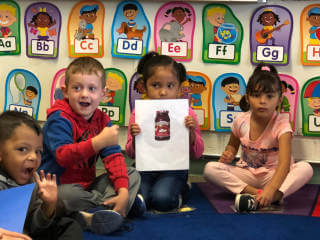
Feature 4 of SIOP Lesson Preparation challenges teachers to go beyond the textbook. The author of any textbook does not personally know your students, their backgrounds, or their specific needs. Identifying supplementary materials—visuals, graphic organizers, realia, manipulatives, leveled texts, multimedia resources—is how teachers bridge the gap between the generic curriculum and the real students sitting in front of them.
For English Learners, supplementary materials are not optional enrichment. They are essential scaffolds. A diagram of the water cycle makes the concept accessible even when a student cannot yet parse the textbook paragraph describing it. A bilingual glossary helps students connect new English vocabulary to concepts they already understand in their home language. A short video clip provides context that no amount of lecturing can replicate. Effective SIOP lesson preparation means curating these resources intentionally, not scrambling for them mid-lesson.
Features 5 and 6 round out the lesson preparation component by asking teachers to consider how content will be adapted for students at varying proficiency levels and how activities will integrate content learning with language practice. Adaptation does not mean dumbing down—it means providing multiple pathways to the same rigorous content. A newcomer student and a student at the intermediate level can both engage with the same science concept, but they may need different sentence frames, different levels of visual support, or different grouping configurations to do so successfully.
Planning meaningful activities means designing tasks where students are actively doing something with both the content and the language. A meaningful activity is not a worksheet where students fill in blanks. It is a structured discussion where students use specific academic vocabulary to debate a position, a hands-on investigation where students record observations using targeted language structures, or a collaborative project where reading, writing, speaking, and listening are all woven together.
Consider a 7th-grade social studies teacher preparing a lesson on the causes of the American Revolution. She begins by writing her content objective: “Students will be able to identify three key causes of the American Revolution and explain how each contributed to the colonists’ decision to seek independence.” Her language objective: “Students will be able to use cause-and-effect language (e.g., ‘Because of…, the colonists…’ and ‘This led to…’) to explain the relationship between British policies and colonial resistance.”
She then selects supplementary materials: a timeline visual, a short primary source excerpt with annotations, and a graphic organizer where students will map causes to effects. She adapts the primary source by providing a simplified version for newcomers and a sentence frame bank for intermediate students. Finally, she designs the main activity: a structured partner discussion using a cause-and-effect graphic organizer, followed by a brief written summary using the targeted language structures.
In fifteen minutes of intentional planning, she has created a lesson where every student—regardless of English proficiency—can access the content, practice academic language, and demonstrate understanding. That is the power of SIOP Lesson Preparation.

The most common mistake teachers make is writing content objectives without language objectives—or writing language objectives that are too vague to be useful. “Students will learn new vocabulary” is not a language objective. A strong language objective names the specific language function (compare, describe, explain, argue) and the specific structures or vocabulary students will use.
Another common mistake is selecting supplementary materials reactively rather than proactively. If a teacher realizes mid-lesson that students are not grasping a concept and then scrambles to find a visual, the lesson has already lost momentum. SIOP Lesson Preparation means having those materials ready before the lesson begins.
A third mistake is planning activities that focus entirely on content without integrating language practice. If students spend the entire class period listening to a lecture and then answering comprehension questions independently, they have had almost no opportunity to practice academic language. SIOP challenges teachers to design every activity with both content and language in mind.
Join the English Learner Institute — a 4-day LIVE virtual professional development experience built on the SIOP model. Led by Master Trainer Dr. John Kongsvik.
Q: What is SIOP Lesson Preparation?
A: SIOP Lesson Preparation is the first of eight components in the SIOP framework. It involves writing clear content and language objectives, selecting supplementary materials, adapting content for varying proficiency levels, and planning activities that integrate content learning with language practice.
Q: What is the difference between a content objective and a language objective?
A: A content objective defines what students will learn academically (e.g., identify the causes of the American Revolution). A language objective defines the specific language students will use to access or demonstrate that learning (e.g., use cause-and-effect language to explain relationships between events).
Q: Why does SIOP Lesson Preparation have six features?
A: Lesson Preparation has more features than any other SIOP component because planning is the foundation of effective instruction. The six features cover objectives, materials, content adaptation, and activity design—all of which must be addressed before instruction begins to ensure English Learners can access the lesson.
Q: How does SIOP Lesson Preparation differ from regular lesson planning?
A: Traditional lesson planning typically focuses on content goals and activity sequences. SIOP Lesson Preparation adds an explicit focus on language: what language will students need, how will materials support language development, and how will activities integrate all four language domains (speaking, listening, reading, and writing)?
info@tesoltrainers.com | (505) 204-4361
Copyright © 2026 TESOL Trainers. All rights reserved.