The Four Domains of Language: Reading

Reading is critical language skill that has more of an impact on student success than any other of the four skills.

On this page, John Kongsvik reviews what reading is, what it involves, and how to develop it in the classroom.
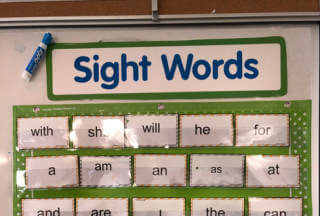
Board with text for teaching kids how to read

What are the four domains of language? ​

The four domains of language (or the four skills) are the four ways that we interact with language.  We speak and listen; we read, and we write. Of these skills, two of the skills, speaking and writing, are considered productive skills since we create language with each of these. On the other hand, listening and reading are described as receptive skills because we are receiving the from an outside source.  This is important to know because the type of skill (or language domain) it is determines how to support its development.

​Listening:  A Receptive Language Skill

Definition:  Reading is actively making meaning from written input.
Ready to Master SIOP in Your Classroom?
Take SIOP from theory to practice with the English Learner Institute — live, remote SIOP® training designed by Master Trainer Dr. John Kongsvik. Next session: June 8–11.

What Reading Involves

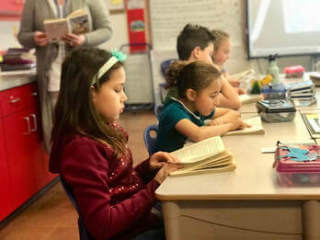
Girl in classroom reading a book
  • Getting clues from the text: layout, headings, and illustrations
  • Using one’s background knowledge about the topic, type of written material (e.g. letter, poem) and language (vocab & grammar) in order to make inferences and predictions.
  • At a literacy level, decoding letters to understand words.
  • Distinguishing which words and groups of words are important and carry the meaning.
    Understanding and interpreting the meaning of those words and groups of words.
    ​Using appropriate strategies depending on the type of material and one’s purpose in reading it (e.g. scanning, skimming, extensive/intensive reading).

What Qualities does an Effective Reading Lesson Have?

TESOL Trainers Four Domains of Language - Listening
  1. Has pre-reading activities to prepare and motivate students to use their background knowledge, anticipate what they will read and decide on a reading strategy.
  2. Helps students practice reading skills.
  3. Helps them learn new vocabulary and information in the L2.
  4. Uses appropriate material that is of value to the students, is at the right level, and is authentic (when possible).
  5. Gives students reading tasks, which can include one or more of the following:
    1. To get general information;
    2. To get specific information;
    3. To accomplish a task.
  6. Requires some kind of response like taking notes, answering Qs, making a decision.
  7. Gives students an opportunity and reason to read the text more than once.
  8. There are follow up activities that include the other skills.

Typical Reading Activities

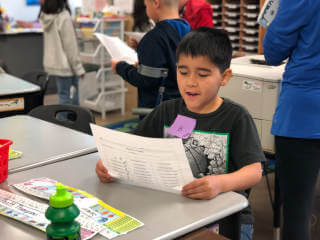
Boy in classroom reading a sheet
  • Find discrete information: Students circle, star, underline, highlight specific terms.
  • Sequencing items: Students read and order specific things in the order they read them.
  • Find specific info: Students read & answer T/F, multiple choice, or short answer Qs.
  • Complete the cloze: Students read and fill in the blanks or note-taking shell.

The Four Domains of Language

* Echevarria, J., Vogt, M. E., & Short, D. J. (2017). Making content comprehensible for multilingual learners: The SIOP model (5th ed.). Pearson.

Ready to bring TESOL Trainers to your school? Contact Dr. John Kongsvik to discuss what your teachers need.

info@tesoltrainers.com | (505) 204-4361