
What Is Sheltered Instruction? A Guide for K-12 Teachers
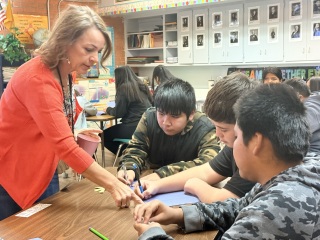
Picture a seventh-grade science class in the middle of a unit on ecosystems. The teacher is clear, organized, and passionate about the content. Most of the class is with her. But in the third row, a student who arrived from Honduras last spring is copying every word from the board and nodding at the right moments. When the teacher asks him a question, he freezes. He is not lost because the science is too hard. He is lost because the English is.
Sheltered instruction exists for that student, and for the teacher who wants to reach him without slowing down the rest of the class.
What Is Sheltered Instruction?
Sheltered instruction is a way of teaching grade-level content in English so that English learners can understand it, while building their academic English at the same time. Every sheltered lesson has two goals: students learn the content, and students learn the language they need to talk, read, and write about that content.
That second goal is what separates sheltered instruction from simply teaching slower or louder. The teacher does not wait for students to learn English first and then teach them science. Content and language grow together, in the same lesson, every day.
Why Is It Called "Sheltered"?
The word "sheltered" refers to the language, not the content. Students are sheltered from English they cannot yet access, so that the ideas get through. They are not sheltered from rigor. The concepts, the standards, and the expectations stay at grade level.
Think of it this way: the destination stays the same for every student. Sheltered instruction changes the road, adding visuals, models, structured talk, and clear objectives so English learners can reach that destination alongside their classmates.
Sheltered Instruction vs. SIOP®: What Is the Difference?
The difference is simple. Sheltered instruction is the approach. The SIOP® Model is one of the most widely used ways to put that approach into practice.
SIOP stands for Sheltered Instruction Observation Protocol. It was developed by Jana Echevarría, MaryEllen Vogt, and Deborah Short to give teachers a concrete, research-based framework for planning and delivering sheltered lessons. Instead of a general idea, teachers get 8 components and 30 features they can plan with, observe, and coach around.
In other words, plenty of teachers say they use sheltered instruction. SIOP makes it visible. You can walk into a SIOP classroom and see the language objective on the board, hear students using academic vocabulary with a partner, and watch the teacher check understanding before moving on. If you want the full picture of the model, start with the ultimate guide to the SIOP Model, or read what SIOP is and how it works.
What Sheltered Instruction Looks Like in a Classroom
Go back to that seventh-grade ecosystems lesson. Here is what changes when the teacher shelters it.
She posts two objectives, not one. The content objective says what students will learn: explain how energy moves through a food web. The language objective says how they will use English to show it: describe a food web using the words producer, consumer, and decomposer, and the frame "Energy moves from ___ to ___ because ___." If you have never written one, these language objective examples walk through every subject.
She builds background before the reading. Students look at photos of a local park and name what they see, in English or in their home language. Now the new content has something to attach to. This is building background, and it is often the difference between a text students decode and a text they understand.
She makes her input comprehensible. She slows her speech a little, uses gestures, draws the food web as she explains it, and models the task before students try it. These are comprehensible input strategies, and none of them lowers the level of the science.
She scaffolds the task. Students first build a food web together with picture cards, then with a partner, then on their own. The supports come down as the students' independence goes up. That is the heart of scaffolding strategies and techniques: scaffold to success, then step back.
She makes students talk. Instead of calling on the three students who always raise their hands, she gives every pair a language shell and a job. Each student explains one link in the food web to a partner. The student in the third row says "producer" out loud, in a full sentence, for the first time. That is the moment vocabulary moves from renting to owning.
Sheltered Instruction Supports All Teachers
Sheltered instruction is often treated as something for the ESL teacher down the hall. In reality, English learners spend much of their school day with content teachers: math, science, social studies, ELA, and electives. Those are the classrooms where sheltered instruction does the most good.
It also helps far more students than the English learners it was designed for. Clear objectives, visuals, modeling, structured partner talk, and frequent checks for understanding help struggling readers, students with gaps in background knowledge, and students who simply learn better when they talk through an idea. These strategies make the whole class stronger, not just the English learners.
That is why I describe sheltered instruction as a way to connect students to the content, the language, and one another. Every teacher in the building can do that.
Two Myths About Sheltered Instruction
Myth: Sheltered instruction waters down the curriculum. It does the opposite. A watered-down lesson lowers the expectation. A sheltered lesson keeps the expectation and builds a way for every student to reach it. If students are reading an easier text, answering easier questions, and leaving with less content, that is not sheltered instruction.
Myth: It is just good teaching. Sheltered instruction is built from good teaching, but good teaching alone does not plan for language. A strong teacher can deliver a beautiful lesson that an English learner still cannot access. Sheltered instruction asks one extra question in every lesson: what language will students need to learn this, and how will I teach it?
How to Start Using Sheltered Instruction Tomorrow
You do not need a new curriculum. You can start with your next lesson.
1. Write one language objective next to your content objective, and read both aloud with students.
2. Pick three to five key words students must own by the end of the lesson. Teach them with a visual, a gesture, or a real object before students meet them in the text.
3. Give students a sentence frame and two minutes to explain the main idea to a partner before anyone answers in front of the whole class.
4. Check understanding with every student, not just volunteers: thumbs up, whiteboards, or a quick written response using the target words.
5. Model the task before students try it, so they see what success looks like.
Do this consistently and you will see it in your students' confidence and competence within weeks.
Learn Sheltered Instruction by Experiencing It
The fastest way to understand sheltered instruction is to sit in a sheltered lesson as a learner. That is how I teach the English Learner Institute. It is live on Zoom, fully interactive, and never sit-and-get. You experience model SIOP lessons the way your students would, then we unpack exactly what made them work, and you leave with strategies you can use the very next morning.
If you want those strategies to stick across your school, iCOACH™ peer coaching takes teachers from trying a strategy once to using it every day.
Frequently Asked Questions
What is sheltered instruction in simple terms?
Sheltered instruction is teaching grade-level content in English in a way English learners can understand, while helping them build the academic English they need for that subject.
Who uses sheltered instruction?
Any K-12 teacher with English learners in the room: content teachers, ESL and ML specialists, co-teachers, and instructional coaches. It is most powerful in mainstream content classes, where English learners spend much of their day.
Is sheltered instruction the same as SIOP?
Not exactly. Sheltered instruction is the general approach. The SIOP Model is a specific, research-based framework for planning and delivering sheltered lessons, organized into 8 components and 30 features.
Is sheltered instruction the same as SDAIE or SEI?
They are closely related. SDAIE (Specially Designed Academic Instruction in English) and SEI (Sheltered English Immersion) are names some states and districts use for programs built on the same idea: teaching content in English in a way English learners can understand.
Does sheltered instruction help students who are not English learners?
Yes. Clear objectives, visuals, modeling, structured partner talk, and frequent checks for understanding support every student, especially struggling readers and students who need more time to process new content.